
 Book Now
Cellular Jail Port Blair: Complete Visitor Guide
Cellular Jail is the single most-visited landmark in Port Blair, and for good reason: it's one of the most powerful memorials to India's freedom struggle anywhere in the country. For many visitors, it's also the emotional centerpiece of an Andaman trip — a place where history feels less like a textbook chapter and more like something you can physically walk through. If you're staying nearby — Hotel Aparupa is just a short drive away — here's everything worth knowing before you go.
A Brief History of Cellular Jail
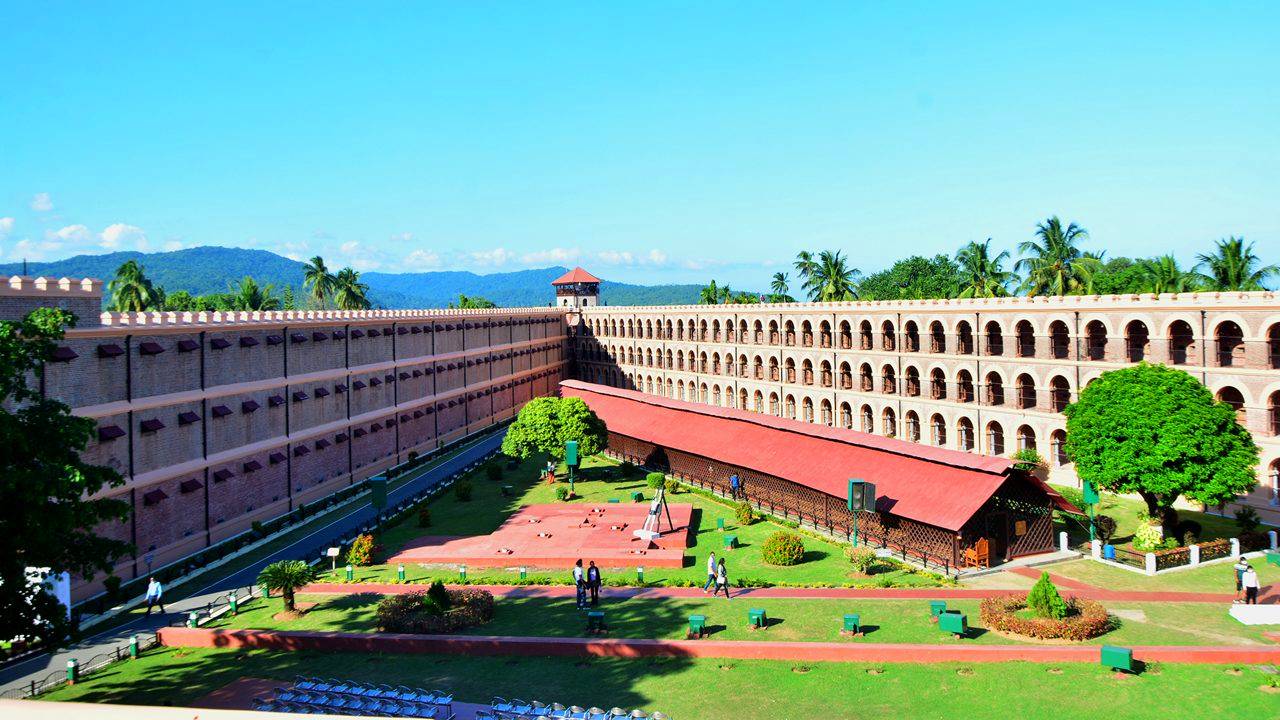
Construction of Cellular Jail began in 1896 and was completed in 1906, built by the British colonial government specifically to isolate political prisoners from mainland India. The jail's name comes from its design: rather than communal barracks, it was built with individual solitary cells, arranged so that no prisoner could see or speak to another. Over the following decades, the jail became infamous as a place of imprisonment and forced labor for numerous Indian freedom fighters, many of whom endured brutal conditions here for their role in the independence movement.
After India's independence, the jail was preserved as a national memorial rather than demolished, and it was officially declared a National Memorial in 1979. Today, it stands not just as a historical site but as a place of remembrance, drawing visitors from across the country who want to understand a difficult chapter of India's path to independence.
-
1896
Construction begins under the British colonial government.
-
1906
Construction is completed, built to isolate political prisoners from mainland India.
-
1947
India gains independence; the jail is preserved rather than demolished.
-
1979
Cellular Jail is officially declared a National Memorial.
Understanding the Architecture
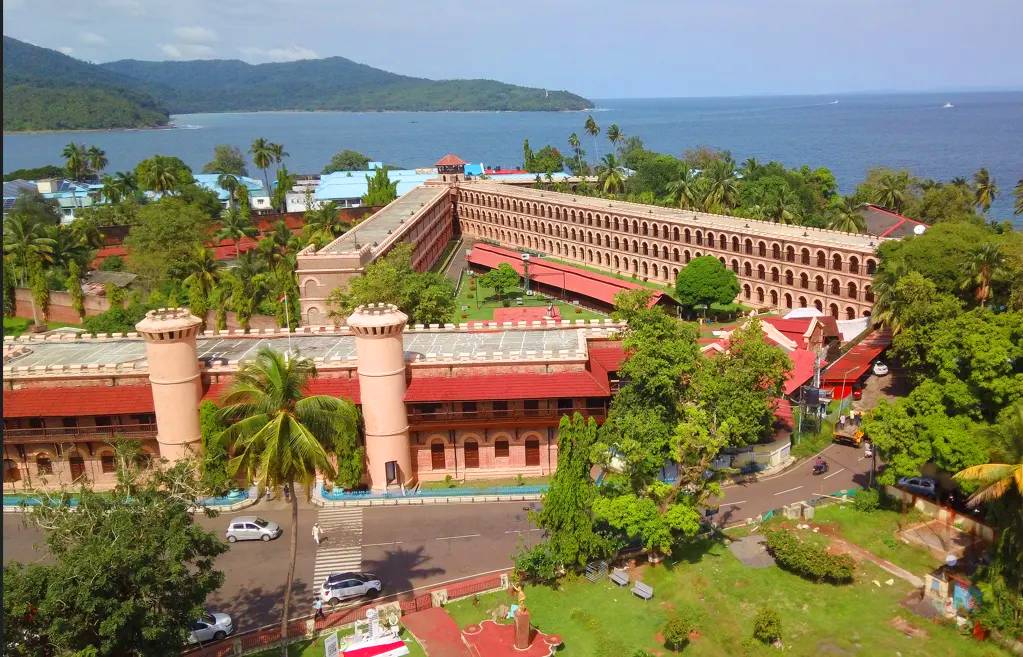
Originally, Cellular Jail was built with seven wings radiating outward from a central watchtower, in a design similar to the spokes of a wheel — a layout intended to let guards observe every wing from a single vantage point while keeping prisoners in near-total isolation from one another. The jail originally held 693 individual cells. Today, only three of the original seven wings remain standing; the others were demolished after independence, though the surviving structure still gives a vivid sense of the scale and severity of the original design.
What to See Inside
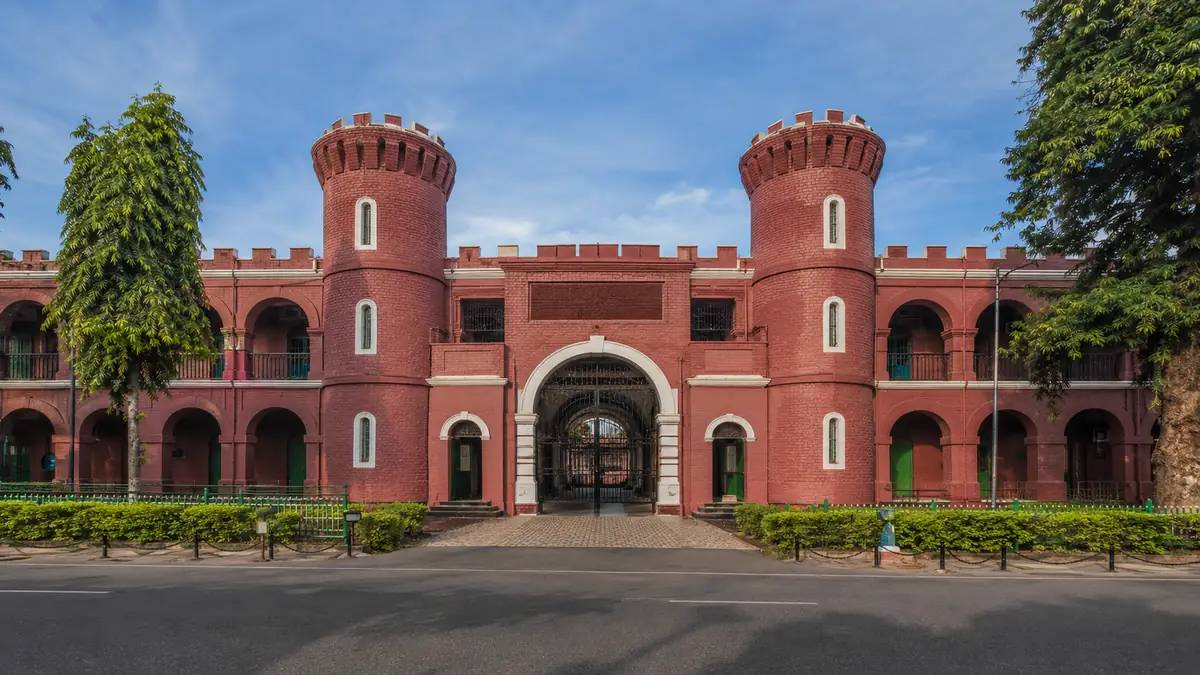
The original cell blocks, including preserved solitary confinement cells you can walk through
A small on-site museum with photographs, documents, and personal artifacts connected to the freedom fighters imprisoned here
The gallows, preserved as part of the historical site and one of the more sobering stops on the visit
The central watchtower, which offers a clear view across the remaining wings and helps you understand the original radiating layout
A Martyrs Memorial and flame, commemorating those who died in the jail
Visiting Hours and Tickets
The jail and museum are typically open through the morning and into the afternoon, closing for a break before reopening for the evening Light and Sound Show after sunset. Exact timings shift slightly by season, so it's worth checking locally or asking at your hotel's front desk on arrival rather than relying on information that may be out of date.
Entry tickets for the daytime visit are inexpensive and can usually be purchased at the gate; tickets for the evening Light and Sound Show are generally sold separately and may need to be booked slightly in advance during peak season.
The Light and Sound Show
Held in the evening within the jail's central courtyard, the Light and Sound Show narrates the history of the freedom fighters imprisoned here, using lighting effects, recorded narration, and sound design projected across the old cell blocks. Shows are typically presented in Hindi and English on alternating days or time slots, so it's worth confirming the language schedule in advance if you have a preference.
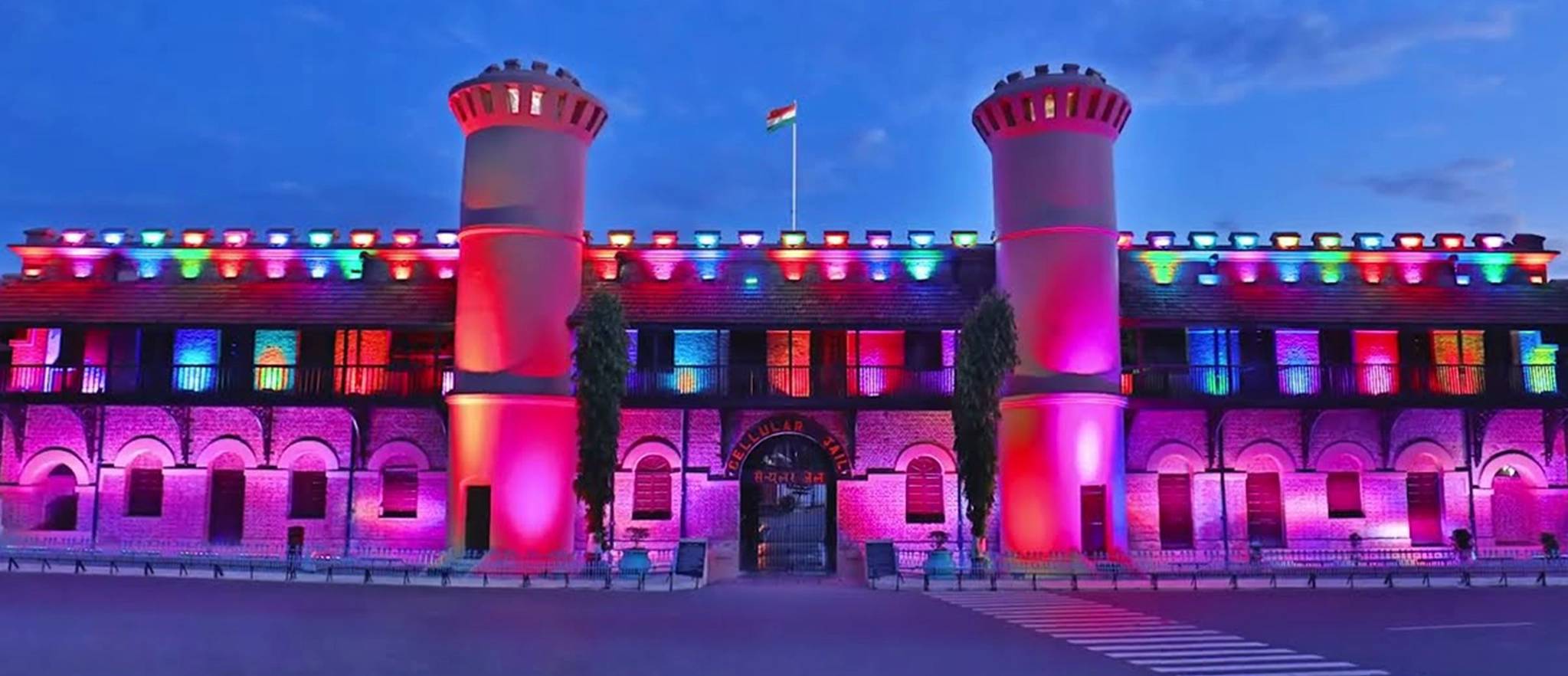
The show runs for roughly 45 minutes to an hour and is widely considered a must-do for anyone visiting Port Blair — it's a very different experience from the daytime walk-through, more emotional and immersive, and tends to be the part of the visit that stays with people longest. Seating fills up quickly in peak season (December–January), so arriving a little before the scheduled start time is a good idea.
Tips for Your Visit
- Visit the museum first, then explore the cell blocks, so you have some historical context before walking through the actual cells.
- Wear comfortable walking shoes — there's a fair amount of ground to cover across the museum, the cell blocks, and the watchtower area.
- Carry water, especially if you're visiting between February and May, when daytime temperatures and humidity are at their highest.
- Stay on for the evening Light and Sound Show if your schedule allows — it's genuinely a different experience from the daytime visit and shouldn't be skipped if you have the time.
- If traveling with young children, the daytime visit is generally more manageable than the evening show, which can run long for very young kids.
- Photography is typically allowed in most areas, though it's worth checking current rules at the entrance, as policies can change.
Getting There from Hotel Aparupa
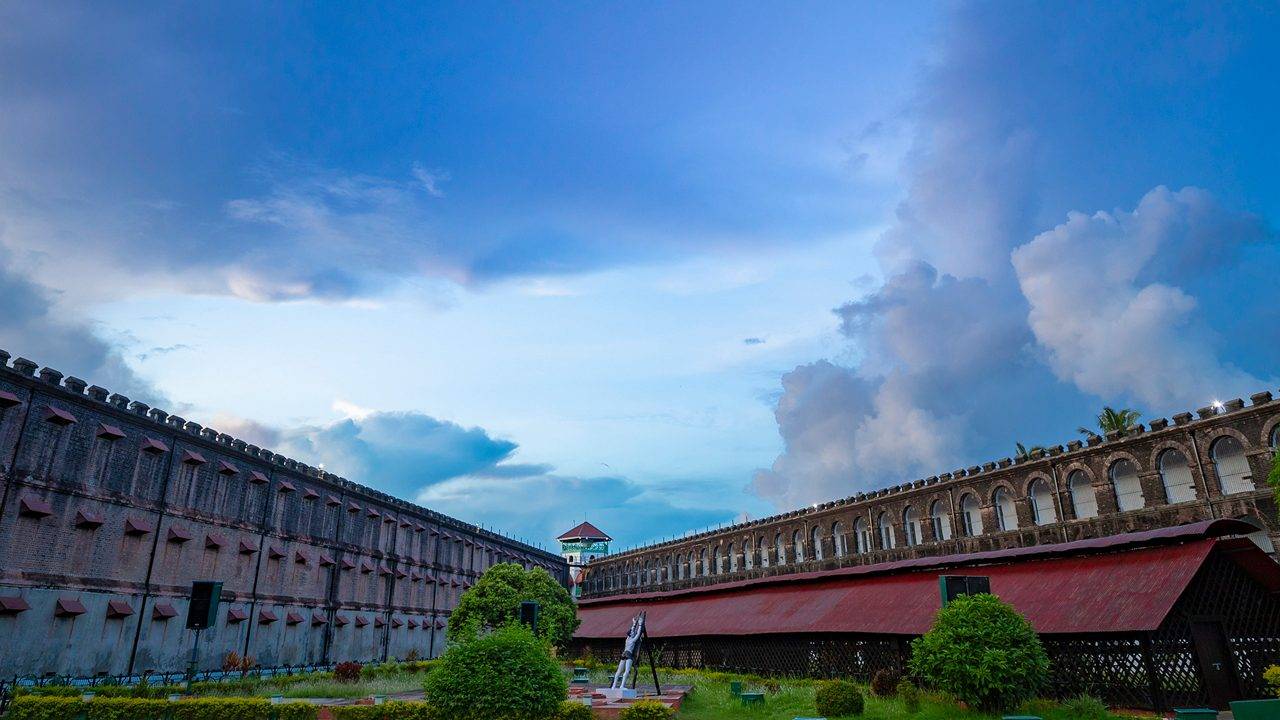
Cellular Jail is only a few minutes from Hotel Aparupa by auto-rickshaw or taxi, thanks to the hotel's central location on Link Road, Goal Ghar. This makes it easy to structure your day around the jail without losing much time to travel. Many guests visit in the morning, return to the hotel for lunch and a short rest, and then head back in the evening for the Light and Sound Show, all without feeling rushed.
Combining Your Visit with Other Nearby Sights
Because Cellular Jail sits close to several other attractions, it's easy to build a full day around it. Consider pairing your morning visit with a stop at the Samudrika Naval Marine Museum or an afternoon walk through Aberdeen Bazaar for lunch and shopping, before returning for the evening show. This kind of loop keeps your day efficient without requiring long trips back and forth across the city.
The Stories Behind the Walls
Part of what makes Cellular Jail so affecting is the sheer number of well-documented individual stories tied to it. Prisoners here endured forced labor, extracting oil from coconuts by hand-operated mills, along with long stretches of solitary confinement designed to break their morale.
“Hunger strikes among prisoners were common as a form of protest against these conditions.”
Several are documented in the on-site museum's exhibits, alongside photographs and personal effects that make the history feel immediate rather than distant.
Best Time of Day to Visit
Mornings tend to be the most comfortable time to explore the outdoor sections of the jail, before the midday heat sets in, and crowds are generally thinner right after opening. If you're mainly interested in the museum, visiting in the early afternoon can work well too, since the exhibits are indoors and shaded. Whatever time you choose for the daytime visit, plan to return separately in the evening for the Light and Sound Show, since it runs as its own scheduled program with a different atmosphere entirely.
Accessibility Notes
The jail grounds involve a fair amount of walking across uneven, sometimes worn stone surfaces, along with some stairs near the watchtower. Visitors with mobility concerns should plan for a slower-paced visit and may want to prioritize the ground-level cell blocks and museum over the watchtower climb.
Benches and shaded rest areas are available at points around the grounds if you need to pause during the visit.
Why Cellular Jail Matters Beyond Port Blair
Cellular Jail's significance extends well beyond a single city or even the Andaman Islands themselves — it's frequently referenced in Indian school curricula and national historical narratives as one of the clearest physical reminders of the sacrifices made during the independence movement. For many Indian visitors, walking through the cell blocks is less a tourist activity than something closer to a pilgrimage, which shapes the generally quiet, respectful atmosphere you'll notice among visitors during the daytime tour. Keeping this context in mind — and perhaps reading a little about the jail's history before you go — tends to make the visit considerably more meaningful than approaching it as just another stop on a sightseeing list.
Combining History with the Rest of Your Trip
Many travelers find that visiting Cellular Jail early in their Port Blair stay — rather than saving it for the last day — helps frame the rest of the trip. Understanding the weight of the islands' colonial history adds context to other nearby sites like Ross Island and Viper Island, both of which are tied to the same period. Staying at a centrally located hotel like Hotel Aparupa makes it easy to sequence your sightseeing this way, without the logistics of the jail visit dictating the rest of your schedule.
Frequently Asked Questions
Plan for one to two hours for the daytime visit to the cell blocks and museum, plus another 45 minutes to an hour if you're staying for the evening Light and Sound Show.
Yes, shows are typically presented in both Hindi and English, usually on alternating days or time slots — it's worth confirming the current schedule locally, since it can change.
The daytime visit is generally manageable for school-age children, particularly with some historical context beforehand. The evening show, being longer and more intense in tone, is usually better suited to slightly older kids and adults.
It's just a few minutes away by auto-rickshaw or taxi, given the hotel's central location on Link Road, Goal Ghar.
A Meaningful Stop on Any Andaman Trip
Whatever else is on your Port Blair itinerary — beaches, snorkeling, island-hopping — Cellular Jail is worth setting aside real time for. It's not just a sightseeing stop; for many visitors, it's the single most memorable part of an Andaman trip, and staying somewhere close by, like Hotel Aparupa, makes it easy to visit without it eating into the rest of your plans.